The Princess is In Another Castle

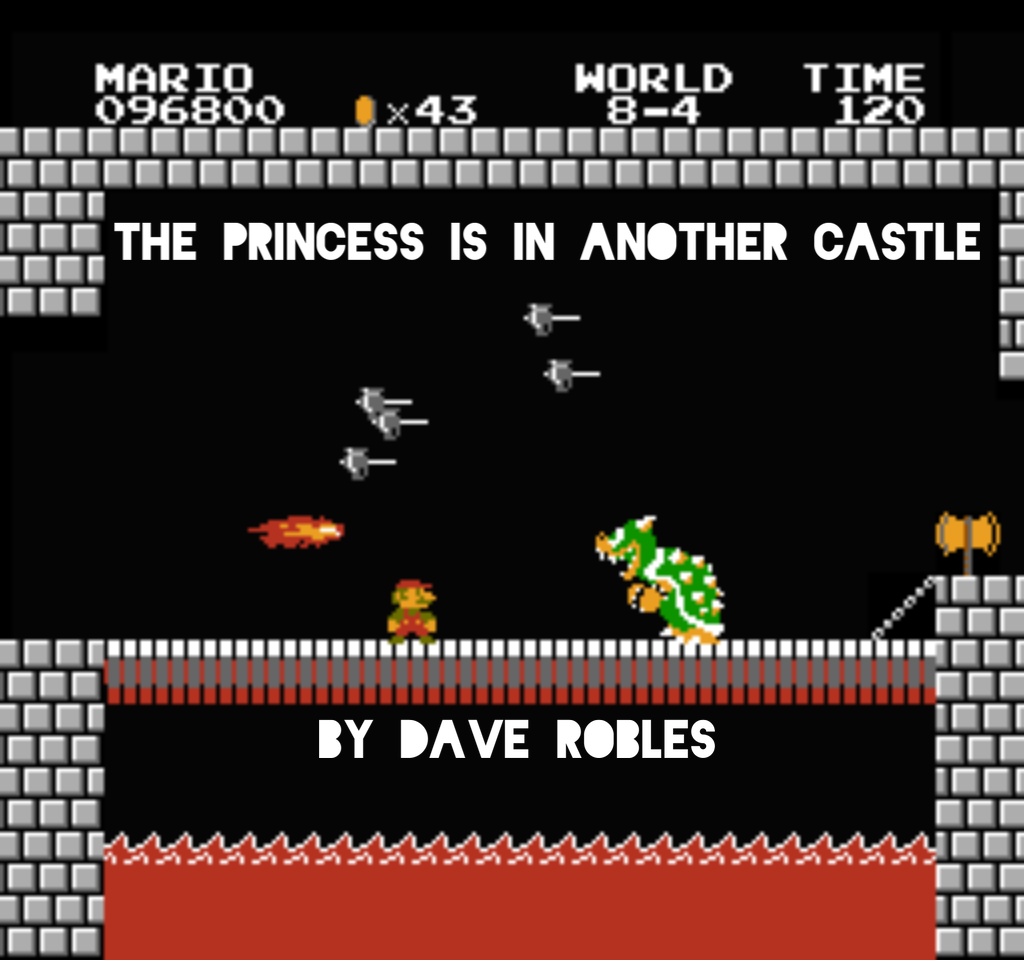
The Princess Is in Another Castle: OR, What this Teacher found out about teaching when he was looking for something else.
A Universal Design for Loving by Dave Robles
① Opening Vignette (Classroom Story)
I must’ve been seven the first time I chased a princess.
It was Super Mario Bros., and my whole world smelled like Cafe Bustelo, Rice and Beans, and the warm hum of a TV that buzzed when you touched the glass. Level after level, I leapt over pits, stomped Goombas, dodged lava, and sprinted toward purpose. Super Mario Brothers was a young gamer’s rite of passage. Beat the game. No warp zones. And in the end? You rescue a princess you’d never met.
And then:
“Thank you Mario! But our princess is in another castle!”
I remember staring at Toad like he had just handed me a philosophy degree.
You mean… I did all that for pixelated fireworks?
But something strange happened. I kept going. Not because the reward was guaranteed but because something in me had already changed. I’d tasted the rite of passage hidden inside the journey. I was leveling up without knowing it.
Years later, I’m running a writer’s workshop, staring at a 7 hour fireplace on Youtube that kids are also staring at for “inspiration.” Somehow the class feels warmer with the fireplace on the projector. I drift away into flashback land and see that same moment in my classroom: the look on a kid’s face when their draft doesn’t land, or the Harkness circle gets stuck, or the group project flounders. I made another rookie error: students are working on a shared Google Doc, and one of them is messing with all the fonts. “Wow,” I say, “did y’all ever play the original Super Mario Brothers?”
In almost unison, they say, “no.” United against their old man born in the late 1900s and his old games from the ‘80s, they magically get back to work, and I’m stuck in metaphor world, blog writing itself in my head.
I scribble on a post it note on my post it app: they thought they were chasing the princess. Really, they were becoming brave.
That’s the ancient wisdom of childhood quests:
You seek one thing… and end up discovering yourself.
② The Lesson / Framework (Abolitionist + UDL + Purpose)
The older I get, the more I believe Mario was my first theologian. My own personal Rev. Dr. Mario Luther King Jr.
Like C.S. Lewis said: “Aim at Heaven and you will get earth thrown in. Aim at earth and you get neither.” I chased a princess, and what I found was stamina, pattern-recognition, resilience, patience, and the joy of adventure. The princess was never the point — the journey was.
Abolitionist teaching works the same way.
If I want great writers, I don’t teach to the rubric. I build a culture of belonging, where students trade ideas like materia and cast spells made of sentences. If I want students to think critically, I don’t assign more worksheets. I give them big, serious questions that activate their courage. If I want collaboration, I don’t lecture about teamwork. I build guilds, rituals, and quests where cooperation becomes muscle memory. They’re still going to mess with each other’s fonts on a Google Doc, but…
The irony of purpose:
When you chase one thing, you find something else.
When I went away to boarding school, I thought my whole quest was simple and sacred: earn enough money to get my mother out of the hood. But in the searching — in the “another castle” after another castle — I found my vocation. I became a teacher who made mom proud, even though she never left our neighborhood, and she still doesn’t want any gifts.
This, too, is the way of the abolitionist tradition:
You walk people out of bondage, and sometimes discover you were liberating yourself.
③ The Practice / How-To (Steps, Rituals, CER, Guild Mechanics)
Here’s how we turn this “princess in another castle” wisdom into classroom practice:
1. Build Off-the-beaten-Path Quests
Give students quests that don’t directly target the skill you want, but grow it anyway.
Examples:
- “Find a line in today’s reading that made you feel seen.”
- “Write a scene where someone realizes they were wrong.”
- “Interview someone in the class you barely know.”
XP Reward: +15 Wanderer Points
2. Use the “Lost on Purpose” Ritual
Once a week, take a detour.
Say: “Writers, for these next ten minutes, follow any curiosity. No destination. Just wandering.”
Students learn that discovery is the real curriculum.
3. CER Mini-Task — Lost & Found
Claim: Sometimes the thing we’re searching for isn’t what we find.
Evidence: Choose a moment from your life (or from a text) where you sought one goal but gained something unexpected.
Reasoning: Explain how this “other castle” outcome helped you grow.
This builds reflective thinking, self-awareness, and literary analysis all at once.
4. Restorative Circle Script — Off-Path Growth
Prompt students with:
- “What was a time you chased one goal but gained another?”
- “What does ‘another castle’ look like in your life right now?”
- “Who helped you keep going when you felt like quitting?”
- “What XP did you earn without knowing you earned it?”
This circle always reveals tenderness.
5. Political Classroom Question
If our society keeps promising a “princess” (success, safety, prosperity) in another castle, how do we decide which journeys are worth taking and who gets access to them?
Let students wrestle with equity, opportunity, and narrative.
6. Gamified Badge of the Week
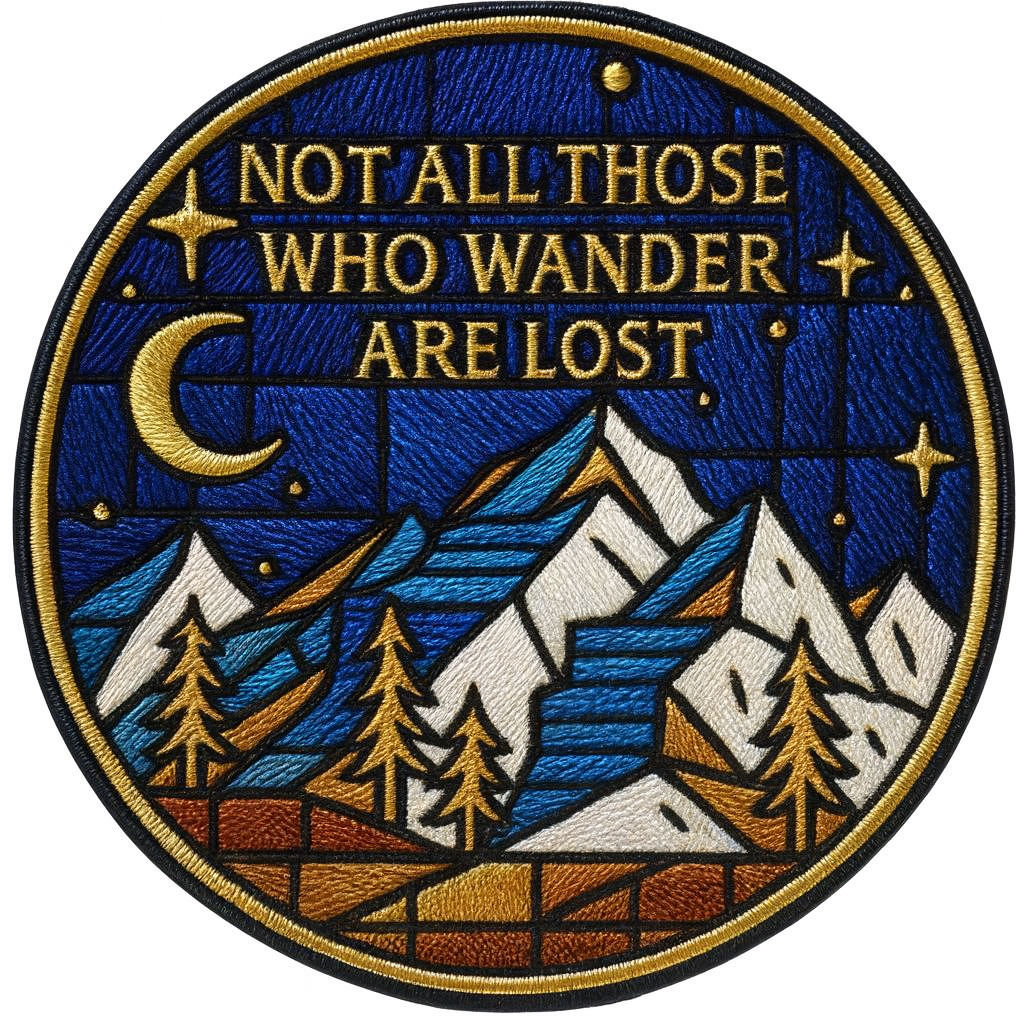
Tarot Badge: “All Who Wander Are Not Lost”
Visual: Stained-glass compass, open road, little pixel-boots at the bottom.
Awarded for:
- taking creative risks
- showing curiosity
- asking brave, off-path questions
- turning detours into insights
XP: +40 Purpose Points
Bestow it upon them like a knighthood.
④ Warm, Prophetic Closing (Blessing, 150–250 words)
If teaching has taught me anything, it’s this:
The castle is never the point.
The child is.
Their courage to leap.
Their stubbornness in lava worlds.
Their tiny victories when no one is watching.
Their soft power blooming in the middle of a hard level.
We are guides on their quest maps — not to deliver them a princess, but to help them notice the XP they’re earning. To remind them that wandering is sacred. To show them that “lost” is often just “becoming.”
Abolitionist teaching is, at its core, this:
walking beside young people as they discover that meaning is not handed to them , they forge it, pixel by pixel, circle by circle, draft by draft.
I think back to that little boy staring at Toad’s message. Disappointed, confused and then strangely alive. I didn’t get the princess. But I got my first lesson in purpose. Getting lost is part of the plan. We honor our becoming by seeking one thing, and finding so many other things along the way.
That’s purpose’s trick:
You search for someone you cannot reach,
and in the searching, you rise.
Abolitionist teaching works the same way.
We guide students not toward a single goal (a grade, a score, an essay) but toward the unreachable horizon of their own becoming. The thing they think they’re looking for is only the map. The fullness of who they become along the way is the treasure.
And now, every day, I have become Toad. I pass the wisdom on:
Keep going, young padawans. There are other castles ahead. And treasure, and friendship, and freedom, and bagels.
Because every child deserves a classroom designed for loving.